
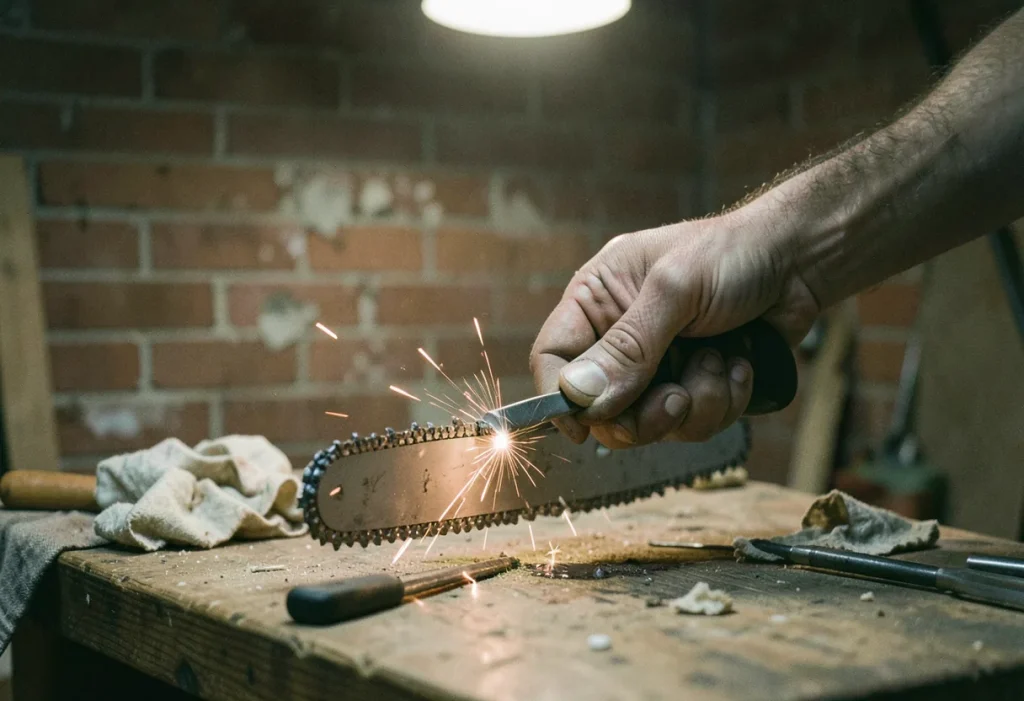
Use a round file to sharpen chainsaw teeth. Match the file size to your chain’s gauge, typically 3/16″ or 5/32″. Hold the file at a 30-degree angle to the tooth’s top plate. Push the file through the tooth’s gullet two or three times per cut.
01The Best Sharpeners for Chainsaws
Chainsaw sharpeners are tools designed to restore the cutting edges of chainsaw chains, ensuring optimal performance and safety.
Think of a chainsaw sharpener like a chef’s knife sharpener: just as a dull knife struggles to slice through ingredients, a dull chainsaw chain fights to cut through wood, requiring more effort and increasing the risk of dangerous kickback.
Key facts
- Manual sharpeners are typically hand files or jigs that guide the filing process.
- Electric sharpeners use grinding wheels to quickly and precisely sharpen chains.
- Sharpeners are designed for specific chain types, so compatibility is crucial.
- Regular sharpening extends the life of your chainsaw chain and improves cutting efficiency.
For DIYers and occasional users, the Oregon 3/8″ Round File Chain Saw Sharpener (Model 582346) is a reliable choice. It’s durable, easy to use, and specifically designed for 3/8″ pitch chains. The main drawback? It requires manual effort and consistency to achieve a sharp edge.
Professionals who need speed and precision should consider the Timberline 8-Inch Electric Chain Saw Sharpener. This tool offers quick, consistent sharpening with minimal effort. However, it’s bulkier and more expensive than manual options.
For those who want a balance between affordability and convenience, the Stihl Chain Saw Sharpening Kit (Model 780 170) includes files and a jig for guided sharpening. It’s ideal for users who want better control than a file alone but don’t need an electric sharpener.
Comparison of Top Sharpeners
02How to Choose Sharpeners for Chainsaws
- Frequency of Use: If you use your chainsaw frequently, an electric sharpener will save time. For occasional use, a file or jig is sufficient.
- Budget: Files are the cheapest, followed by jigs, with electric sharpeners being the most expensive.
- Skill Level: Beginners may find electric sharpeners easier to use, while experienced users might prefer the control of a file.
- Chain Type: Ensure the sharpener is compatible with your chain’s pitch and gauge.
03The Best Brand of Chainsaw to Buy
Stihl, Husqvarna, and Echo are among the best brands for chainsaws. Stihl chainsaws are known for their durability and performance, making them a favorite among professionals. Husqvarna offers a balance of quality and affordability, while Echo provides reliable, budget-friendly options.
The first time I really looked at chainsaw brands, I was surprised by how much engineering goes into each model. Stihl’s ergonomic designs and Husqvarna’s low-vibration engines are standout features.
04What Brand Chainsaw Do Most Loggers Use?
Most professional loggers prefer Stihl or Husqvarna chainsaws due to their reliability and performance. These brands offer models like the Stihl MS 261 and the Husqvarna 572 XP, which are designed for heavy-duty use and long-lasting performance.
05How Big of a Chainsaw Do You Need to Cut Down a Tree?
06What Is the Best Off-Brand Chainsaw?
For those looking for a budget-friendly option, Echo and Poulan Pro offer reliable off-brand chainsaws. The Echo CS-400 and Poulan Pro PR500 are popular choices among homeowners who need a dependable chainsaw without the premium price.
07Where to Buy Sharpeners for Chainsaws
For the best selection and prices, check out online retailers like Amazon, Home Depot, and Ace Hardware. Local hardware stores may also carry sharpeners, but online shopping often provides more options and competitive pricing.
08Chainsaw Maintenance Tips
Maintaining your chainsaw is crucial for its longevity and performance. Regularly clean the air filter to ensure proper airflow, which is essential for the engine’s health. Lubricate the chain bar and sprocket to reduce friction and wear. Additionally, check the chain tension frequently, as a loose chain can be dangerous and damage the chainsaw.
Another important aspect of maintenance is keeping the spark plug clean. A fouled spark plug can cause starting issues and reduce engine efficiency. Replace the spark plug as recommended by the manufacturer to maintain optimal performance. Lastly, always use the correct fuel mixture if your chainsaw requires it, as improper fuel can lead to engine problems.
09Safety Tips for Using Chainsaws
Safety should always be your top priority when using a chainsaw. Wear appropriate protective gear, including a helmet, goggles, gloves, and sturdy boots. The should have a face shield to protect against debris, and the gloves should be cut-resistant. Additionally, wear ear protection to reduce the risk of hearing damage from the loud noise.
Before starting the chainsaw, inspect the chain for any damage or dullness. A dull chain can be more dangerous as it requires more force to cut, increasing the risk of kickback. Always start the chainsaw on a flat surface and ensure it is in good working condition. When cutting, maintain a stable stance and keep both hands on the chainsaw at all times.
10Best Chainsaws 2025
While specific models for 2025 haven’t been released yet, brands like Stihl, Husqvarna, and Echo are expected to continue innovating with lighter, more efficient chainsaws. Stay tuned for updates as new models are announced.
11How to Use a Chainsaw Sharpener
Using a chainsaw sharpener correctly is essential for maintaining the cutting efficiency of your chainsaw. For manual files, align the file with the cutting edge at the correct angle (usually 30 degrees for most chainsaws) and push it through the teeth in a controlled, even motion. Repeat this process for each tooth, ensuring consistency in angle and pressure.
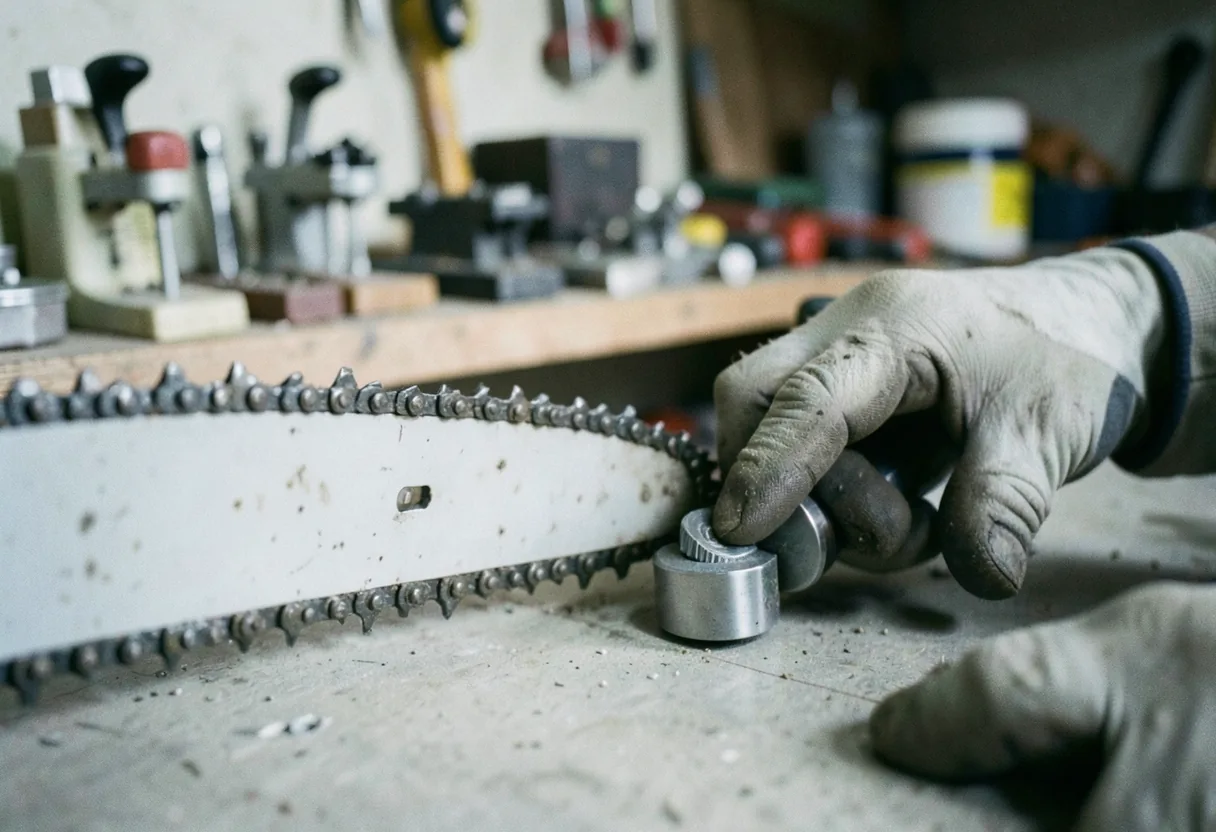
For electric sharpeners, secure the chainsaw bar in the sharpener’s clamp and follow the manufacturer’s instructions to position the chain correctly. Electric sharpeners often have guides to ensure the correct angle, making the process faster and more precise. Always refer to the user manual for specific instructions related to your sharpener model.
12Chain Maintenance Schedule
Maintaining a regular chain maintenance schedule is crucial for the longevity of your chainsaw. Here’s a simple schedule to follow:
- After Every Use: Clean the chain and bar, check chain tension, and lubricate the chain.
- After 5 Hours of Use: Sharpen the chain using a file or electric sharpener.
- After 20 Hours of Use: Replace the chain if it shows significant wear or damage.
- Seasonally: Perform a thorough inspection of the chain, bar, and other components, and replace any worn parts.
13The Role of Chainsaw Sharpeners in Professional Logging
In professional logging, efficiency and safety are paramount. Chainsaw sharpeners play a critical role in ensuring that chainsaws remain sharp and effective. The often relies on high-performance sharpeners like the Granberg Mark IV Bar Mount Sharpener, which is designed for use in the field. This sharpener mounts directly to the chainsaw bar, allowing loggers to sharpen their chains quickly and efficiently without having to remove the bar.
The Granberg Mark IV is particularly popular among loggers because it is durable and easy to use. It features a guide that ensures the correct sharpening angle, which is crucial for maintaining the chain’s cutting efficiency. The sharpener is also compact and lightweight, making it easy to carry in the field. However, it does require practice to use effectively, and loggers need to be familiar with the process to achieve the best results.
For loggers who prefer a more portable option, the Buffalo Tools Electric Chainsaw Sharpener is a good choice. This sharpener is designed for use with a variety of chain types and offers quick, consistent sharpening. It is powered by electricity, which makes it faster than manual sharpeners. However, it is bulkier and requires a power source, which may not always be available in remote logging areas.
14Chainsaw Sharpeners for Homeowners
For homeowners who use chainsaws for occasional tasks like pruning trees or cutting firewood, a manual sharpener is often the most practical choice. The Oregon 3/8″ Round File Chain Saw Sharpener is a popular option among homeowners because it is affordable, easy to use, and effective. It is designed for use with 3/8″ pitch chains, which are common on many homeowner-grade chainsaws.
The Oregon sharpener consists of a round file that is used to sharpen the chain’s cutting teeth. The file is inserted into the teeth at the correct angle and pushed through in a controlled motion. This process is repeated for each tooth until the chain is sharp. While it requires some effort and practice, it is a cost-effective way to maintain a chainsaw’s cutting efficiency.
For homeowners who want a more convenient option, the Stihl Chain Saw Sharpening Kit is a good choice. This kit includes a file and a jig that guides the sharpening process. The jig ensures the correct sharpening angle, which is crucial for achieving a sharp, even edge. The kit is easy to use and does not require electricity, making it a good choice for homeowners who do not want to invest in an electric sharpener.
The best sharpeners for chainsaws depend on your needs, but investing in a quality sharpener will keep your chainsaw in top condition and make your work easier and safer.
15Frequently asked questions
What's the best file size for sharpening a chainsaw?
A 5/32-inch or 6/32-inch flat mill file works best for most chainsaw teeth. The file should be slightly longer than the length of the cutter to ensure full contact. Always match the file's gauge to your chainsaw's pitch, commonly .325-inch for most Stihl and Husqvarna saws.
How often should I sharpen my chainsaw?
Sharpen your chainsaw after every 3-5 hours of use, or immediately if you notice reduced cutting performance. Regular sharpening prevents excessive wear on the saw and ensures cleaner cuts. Always check for dull teeth before each use to avoid unnecessary strain on the motor.
What are the benefits of using an electric chainsaw sharpener?
Electric sharpeners like the Oregon 511-120 save time and ensure consistent angles, often sharpening a full chain in under a minute. They are particularly useful for professional loggers or those who use their saws frequently. Always follow the manufacturer's instructions for optimal results and safety.
Can I sharpen a chainsaw with a round file?
Round files are used for sharpening the depth gauges (or rakers), not the cutting teeth. Use a round file that matches the chain's gauge, typically .050-inch or .063-inch. File the depth gauges in a forward motion until they are slightly lower than the cutting edge to maintain proper cutting efficiency.