
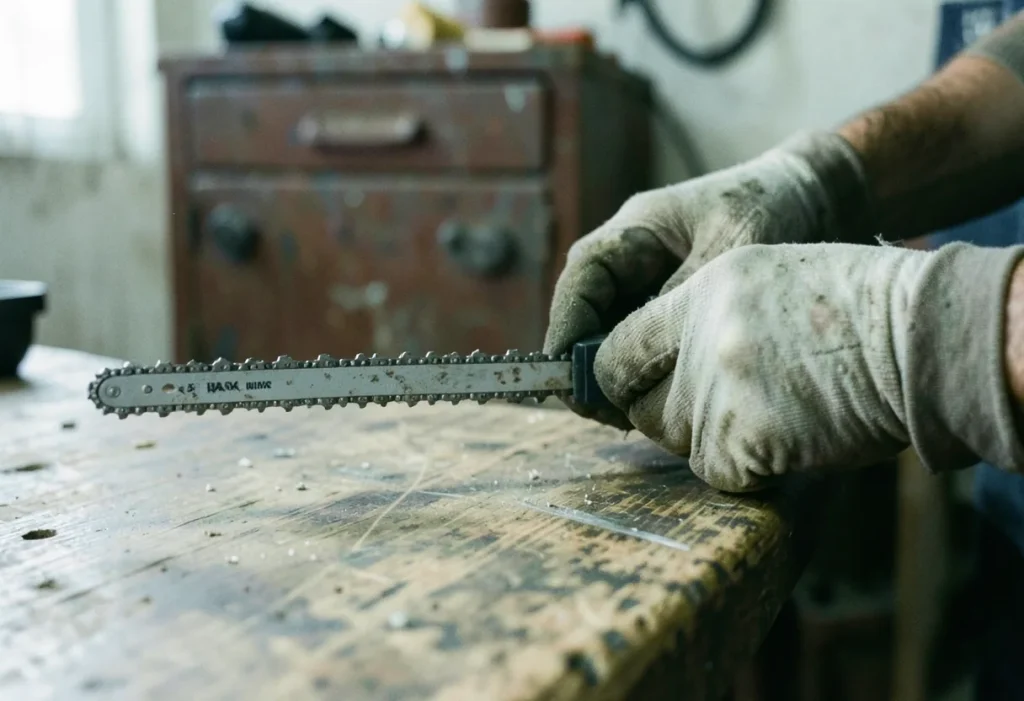
Chain for chainsaws are essential for efficient cutting. Oregon’s 20-inch 72 Drive Link chain, designed for the Stihl MS 261, offers durability and sharpness. Husqvarna’s 18-inch 72DLX chain fits their 450 model, providing smooth operation. Always match chain pitch and gauge to your chainsaw’s bar. Regular maintenance ensures optimal performance.
A chainsaw chain sharpening kit is a set of tools designed to restore the cutting edges of a chainsaw chain, ensuring efficient and safe operation. This kit typically includes files, guides, and depth gauges to maintain the chain’s sharpness and performance.
Think of it like a tuning kit for a chainsaw, just as a guitarist needs to tune their instrument to play properly, a chainsaw needs its chain sharpened to cut effectively.
Key facts
- A standard sharpening kit includes round files, a flat file, a depth gauge tool, and a filing guide to ensure accurate sharpening.
- The round file size matches the chain’s pitch, with common sizes being 3/8″, 0.325″, and 0.404″.
- Chainsaw chains should be sharpened after every hour of use for optimal performance.
- Improper sharpening can lead to kickback, uneven cuts, and increased wear on the chainsaw.
Sharpening kit types and compatibility
01How to choose a chainsaw chain sharpening kit
When selecting a sharpening kit, start by identifying your chain’s pitch and gauge. For instance, a Husqvarna 455 Rancher typically uses a 0.325″ pitch and 0.050″ gauge, while a Stihl MS 261 may require a 3/8″ pitch and 0.063″ gauge. The Oregon 584175 Chain Saw Sharpener Kit is a popular choice for its durability and ease of use. The drawback? It may not be as precise as a bench-mounted kit for those who demand perfection.
For field use, a portable sharpening kit like the is ideal. It includes a file, filing guide, and depth gauge, allowing you to sharpen your chain on the go. The downside? It requires practice to achieve consistent results. For home workshops, a bench-mounted kit offers more stability and precision. The Stihl Chain Sharpener Kit is a top choice, featuring a sturdy base and adjustable guides. The catch? It’s more expensive than portable kits.
02Best electric chainsaw sharpeners
The Timberline Electric Chain Sharpener is a standout option, featuring a powerful motor and adjustable guides for precise sharpening. It’s perfect for professionals who need to sharpen multiple chains quickly. The drawback? It requires a power source, making it less portable than manual kits.
For those who prefer a cordless option, the Makita Electric Chain Sharpener offers the convenience of battery power without sacrificing performance. It’s ideal for contractors who need to sharpen chains on job sites. The downside? The battery life may not last for extensive sharpening sessions.
Sharpening techniques
03How to sharpen a chainsaw chain
Start by securing the chainsaw in a vise or on a stable surface. Ensure the chain is taut but not overly tight. Using a round file that matches your chain’s pitch, file each cutter with smooth, even strokes. The file should be held at a 30-degree angle to the cutter’s edge. After sharpening the cutters, use a flat file to adjust the depth gauges, ensuring they are set to the manufacturer’s specifications.
The first time I sharpened a chainsaw chain, I realized how crucial it is to maintain a consistent angle. Using a filing guide helps achieve this, ensuring all cutters are sharpened uniformly. Remember to sharpen both sides of the chain, as this balances the cutting action and reduces vibration. After sharpening, test the chain on a piece of wood to ensure it cuts smoothly and evenly.
04Maintenance tips for chainsaw chains
Regular maintenance extends the life of your chainsaw chain and ensures optimal performance. Always clean the chain after use to remove sawdust and debris. Inspect the chain for signs of wear, such as dull cutters or damaged drive links. Lubricate the chain regularly with bar and chain oil to reduce friction and prevent overheating. Additionally, store your chainsaw in a dry place to prevent rust and corrosion.
Using the right type of chain oil is crucial for maintaining your chainsaw. For example, the Husqvarna Bar and Chain Oil is specifically designed to reduce friction and prolong the life of your chain. Avoid using general-purpose oils, as they may not provide the necessary lubrication and protection. Regularly check the chain tension, as a loose chain can derail or bind, leading to unsafe operation.
05Safety precautions when sharpening a chainsaw chain
Always wear protective gloves and safety glasses when sharpening a chainsaw chain to prevent injuries from sharp edges and debris. Ensure the chainsaw is turned off and the chain is stationary before starting the sharpening process. Use a vise or stable surface to secure the chainsaw, preventing it from moving during sharpening. Never rush the sharpening process, as improper sharpening can lead to kickback and uneven cuts.
When using an electric sharpener, ensure it is properly grounded and connected to a reliable power source. Avoid wearing loose clothing or jewelry that could get caught in the sharpener. Always follow the manufacturer’s instructions for the specific sharpener you are using. Regularly inspect the sharpener for wear and damage, replacing any worn or damaged parts as needed.
06How often should you sharpen a chainsaw chain?
The frequency of sharpening depends on the intensity of use. For occasional users, sharpening the chain every few uses may be sufficient. For professional loggers or frequent users, sharpening after every hour of use is recommended. Regular sharpening ensures the chain remains sharp and efficient, reducing the risk of kickback and improving cutting performance.
Using a sharpening kit like the Oregon 584175 Chain Saw Sharpener Kit makes the process straightforward. The kit includes a file, filing guide, and depth gauge, allowing you to sharpen the chain accurately and efficiently. Always refer to your chainsaw’s manual for specific sharpening guidelines and recommendations.
07Best chainsaw sharpening services
If you prefer professional sharpening services, many hardware stores and chainsaw dealers offer this service. For example, Home Depot provides chainsaw sharpening services at a reasonable cost. The advantage? Professionals have the expertise and tools to ensure your chain is sharpened to perfection. The drawback? It may take longer than doing it yourself, especially if you need the chain sharpened frequently.
Local chainsaw dealers, such as Chainsaws for Sale Near Me: Local Dealers & Inventory Guide, often provide sharpening services as well. They can also offer advice on maintaining your chainsaw and selecting the right chain for your needs. Always inquire about the cost and turnaround time for sharpening services to ensure they fit your budget and schedule.
Always store your chainsaw in a dry place, away from direct sunlight. Regularly inspect the chain for wear and tear, and sharpen it as needed using a tool like the Oregon 584175 Chain Saw Sharpener Kit. Remember, a well-maintained chain ensures clean cuts and extends the life of your chainsaw.
08Frequently asked questions
What does chainsaw chain pitch mean and why does it matter?
Pitch refers to the distance between any three consecutive rivets divided by two, measured in inches. Common pitches are 3/8", 0.325", and 0.404". It determines how deep the chain bites into wood. A lower pitch like 3/8" is better for smaller chainsaws and precision work, while higher pitches handle larger trees faster but require more power.
How do you measure chainsaw chain gauge?
Gauge is the thickness of the drive link, usually ranging from 0.043" to 0.063". Check your chainsaw's bar groove width to match it. A 0.050" gauge fits most modern chainsaws. Incorrect gauge causes poor performance or damage. Measure with a caliper for accuracy.
What's the best way to measure chainsaw chain length?
Count the drive links and multiply by the pitch. For example, a 50-link chain with 0.325" pitch needs 16.25 inches. Alternatively, wrap the chain around the bar and match the numbers on the links where they meet. Always round up to the nearest even number.
How often should chainsaw chains be replaced?
Replace chains when teeth are dull, damaged, or uneven. For regular users, this might be every 2-3 months. Professional loggers may replace chains weekly. Always carry a spare chain for safety. Check for wear on the chain's depth gauges and side plates too.