
How to Sharpen Chainsaws: Step-by-Step Guide & Tool Reviews

Sharpen chainsaws by filing teeth with a round file matching your chain’s gauge. Hold the file at a 30-degree angle, pull it through each tooth two to three times, and maintain equal spacing. Follow the cutting edge’s angle, and alternate sides for every other tooth.
How to sharpen chainsaws involves restoring the cutting edges of your chainsaw’s chain to optimal performance, ensuring efficient cutting and reducing the risk of accidents.
Think of sharpening a chainsaw like honing a chef’s knife, both require precision to slice through material effortlessly. Just as a dull knife struggles to cut cleanly, a dull chainsaw chain struggles to cut wood, making the task slower and more dangerous.
Key facts
- A properly sharpened chainsaw chain can cut up to 20% faster than a dull one.
- Most chainsaw chains lose their sharpness after 3-5 hours of use, depending on the material being cut.
- Sharpening by hand typically requires a round file that matches the chain’s pitch and gauge.
- Electric sharpeners, like the Oregon 520-310 Bench Grinder, can sharpen a chain in under a minute but require precise setup.
01What you need
- A round file (e.g., 5/32″ or 3/16″ diameter, depending on your chain’s gauge)
- A flat file for adjusting depth gauges
- A chainsaw file guide or a jig to maintain the correct angle
- Gloves and safety glasses
- A vise or stable workbench
- Bar and chain oil for lubrication
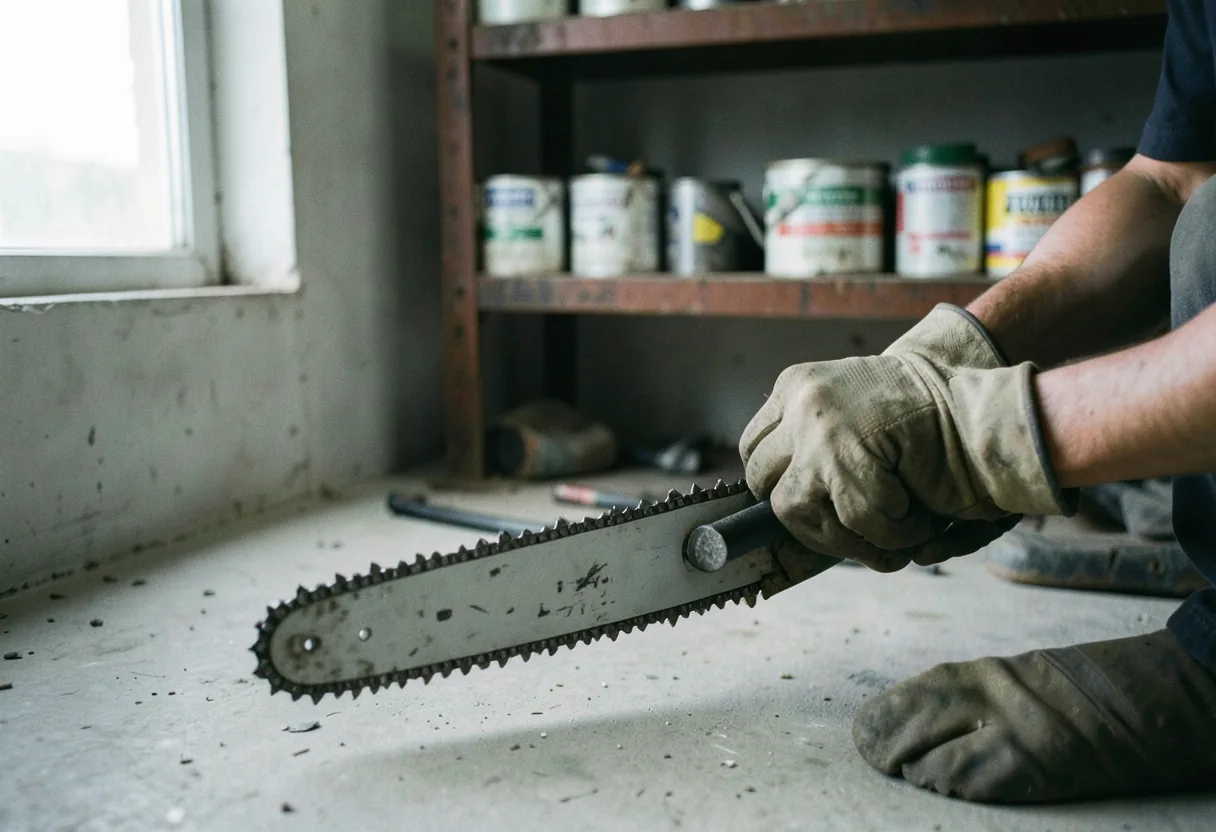
02Step-by-step procedure
- Prepare your work area: Secure the chainsaw in a vise, ensuring the chain is taut and the bar is stable. Wear gloves and safety glasses to protect against metal shavings and debris.
- Clean the chain: Use compressed air or a brush to remove sawdust and debris from the chain. A clean chain allows for more accurate sharpening.
- Mark a starting point: Place a dot of paint or tape on one cutter tooth to track progress and ensure you sharpen each tooth evenly.
- Set the file guide: Attach the file guide to the chain, aligning it with the cutting edge. The guide should maintain a 30-degree angle for most chainsaws.
- File each tooth: Insert the round file into the guide and push it through the cutting edge with smooth, even strokes. Apply moderate pressure and keep the file perpendicular to the chain.
- File the depth gauges: Use a flat file to lightly file the depth gauges (the small metal tabs between the cutting teeth). This ensures the chain cuts cleanly without binding.
- Check the tension: After sharpening, adjust the chain tension to ensure it moves freely around the bar but remains snug.
- Test the sharpness: Hold the chainsaw securely and attempt a test cut on a small piece of wood. If it cuts smoothly, the sharpening is complete.
03Common mistakes to avoid
Over-filing the teeth can weaken the chain and reduce its lifespan. Always use the correct file size for your chain’s gauge and pitch. Failing to adjust the depth gauges can lead to an uneven cut and increased wear on the chainsaw.
04How to sharpen chainsaws with a Dremel
For those looking for a faster method, a Dremel tool with a sharpening wheel attachment can be used. Secure the chainsaw in a vise and carefully guide the Dremel along each cutting edge, maintaining a consistent angle. This method requires precision to avoid overheating the chain.
05How to sharpen chainsaws by hand
Sharpening by hand is the most traditional method and allows for fine control. A round file matched to your chain’s gauge is used in conjunction with a file guide to maintain the correct angle. This method is time-consuming but ensures a high level of accuracy.
06How to sharpen a chainsaw with a file STIHL
STIHL offers a dedicated chainsaw sharpening kit, including a round file, file guide, and depth gauge tool. The kit is designed for easy use and ensures consistent results. Follow the same steps as hand sharpening, but use the STIHL tools for added precision.
07How to sharpen chainsaws with an electric sharpener
Electric sharpeners, like the Oregon 520-310, are ideal for those who sharpen chains frequently. These machines use rotating grinding wheels to quickly restore the chain’s cutting edges. Ensure the chain is properly aligned and clamped before starting the sharpener.
08How to sharpen chainsaws with a drill
Some sharpening kits, such as the Timberline Chainsaw Sharpener, attach to a drill for powered sharpening. The kit includes a grinding wheel that matches the chain’s pitch. Secure the chainsaw in a vise and carefully guide the drill along each cutting edge.
09How much does Ace charge to sharpen chainsaw blades?
As of the latest available information, Ace Hardware typically charges between $10 and $20 to sharpen chainsaw blades, depending on the location and chain type. Always call ahead to confirm pricing and availability.
10Chainsaw chain sharpening chart
11Chainsaw Sharpening Tips
- Always sharpen the chain when it’s cool to avoid burning the metal.
- Use a marker to track which teeth you’ve sharpened to ensure even results.
- Regularly inspect the chain for damage and replace it if necessary.
- Lubricate the chain with bar and chain oil after sharpening to reduce friction.
12How to tell if your chainsaw needs sharpening
Signs of a dull chain include difficulty cutting, excessive vibration, and the need for more physical effort. If the chainsaw produces fine sawdust rather than wood chips, it’s likely time to sharpen the chain.
13How to sharpen a chainsaw: Step-by-step instructions
The step-by-step procedure above provides a comprehensive guide to sharpening your chainsaw. Always refer to your chainsaw’s manual for specific instructions and safety guidelines.
Sharpening your chainsaw regularly ensures it performs at its best and extends its lifespan. Whether you choose to sharpen by hand or use an electric sharpener, the key is consistency and precision.
The first time I really looked at sharpening a chainsaw, I was struck by how much it resembles tuning a musical instrument. Each cutting edge must be precisely aligned and sharpened to create a harmonious cut. Just as a musician fine-tunes their instrument for optimal performance, a chainsaw owner must maintain their tool to ensure it cuts efficiently and safely.
For more detailed information on chainsaw maintenance, check out the best chainsaw sharpeners and chainsaw chains guide available on the market. Additionally, the bar and chain oil guide provides insights into maintaining your chainsaw’s lubrication system.
When it comes to sharpening, consistency is key. Whether you’re a weekend warrior or a professional logger, keeping your chainsaw sharp ensures safer and more efficient cutting. Always prioritize safety and follow the manufacturer’s guidelines for the best results.
14Frequently asked questions
What is the best brand of chainsaw to buy?
Stihl leads in reliability, with models like the MS 261 earning top marks for durability. Husqvarna is another strong contender, known for user-friendly designs such as the 450 Rancher. For budget-conscious buyers, Makita offers solid performance with its 5007MG model.
What brand chainsaw do most loggers use?
Professional loggers often favor Stihl's MS 261 or MS 271 for their robust engines and long-lasting bars. Husqvarna's 550 XP is also popular due to its power and ergonomic design. Echo's CS-591 is another choice for its lightweight yet powerful performance.
How big of a chainsaw do you need to cut down a tree?
A 16- to 18-inch bar is ideal for trees up to 24 inches in diameter. For larger trees, up to 36 inches, a 20-inch bar is recommended. Always match the chainsaw size to the tree diameter to ensure safe and efficient cutting.
What is the best off brand chainsaw?
Poulan Pro offers great value with models like the PP5020AV, which has a 20-inch bar and 50cc engine. TimberPro and XtremepowerUS are also reliable off-brand options, providing good performance at lower prices compared to top brands.