
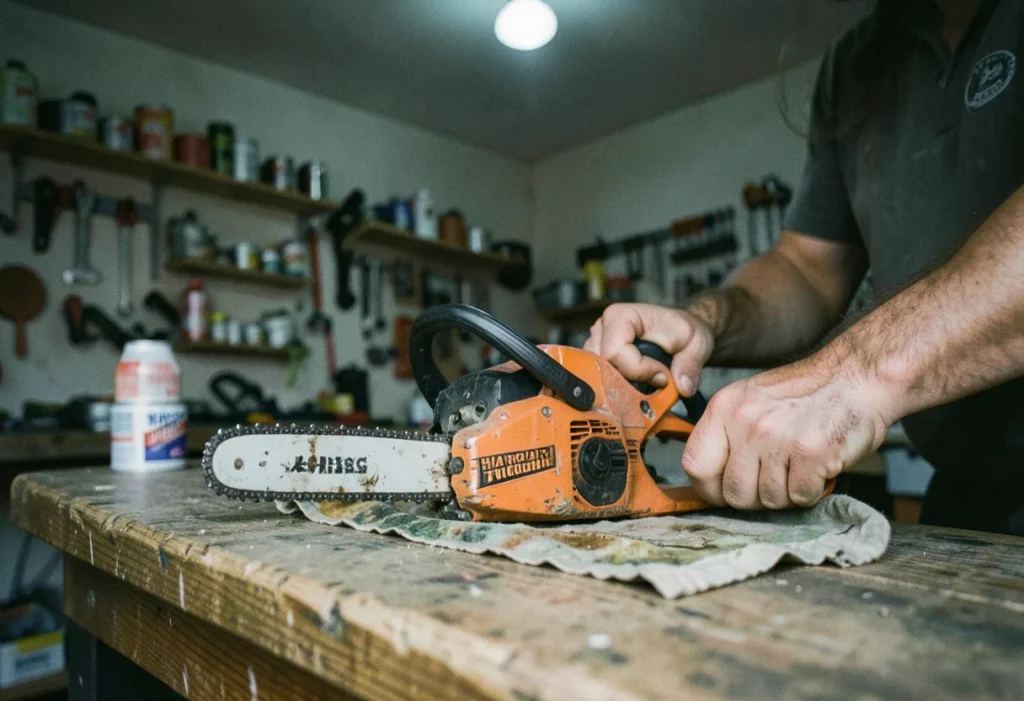
Harbor Freight sells chainsaws like the Chicago Electric 18-inch 42cc Gas Chainsaw for $99.99. Their 14.5V Cordless Chainsaw with 8-inch bar is $59.99. Check stock online or in-store.
01Harbor Freight chainsaw maintenance
Harbor Freight chainsaw maintenance is the process of keeping your chainsaw in peak condition to ensure safe and efficient operation.
Maintaining a Harbor Freight chainsaw is like taking care of a high-performance car. Just as you wouldn’t neglect oil changes and tire rotations, you shouldn’t overlook sharpening the chain, cleaning the air filter, and lubricating the bar and chain.
Key facts
- Harbor Freight offers chainsaw sharpening kits designed for their specific chain gauges.
- Regular air filter maintenance prevents engine damage and maintains performance.
- Proper storage, including draining fuel for long-term storage, extends the lifespan of your chainsaw.
- A dull chain increases the risk of kickback, making sharpening a critical safety task.
02Sharpening your Harbor Freight chainsaw
Sharpening your Harbor Freight chainsaw is a crucial maintenance task that ensures optimal performance and safety. A sharp chain reduces the risk of kickback and makes cutting more efficient. Harbor Freight sells sharpening kits that are compatible with their chainsaws, making it easy to maintain your tool at home.
The first time I really looked at sharpening a chainsaw chain, I was surprised by how straightforward the process is. You’ll need a round-file guide that matches your chain’s gauge, which is typically provided in Harbor Freight’s sharpening kits. Follow the user manual for specific instructions on the correct file size and sharpening angles. The offers detailed tutorials on chainsaw maintenance, including sharpening techniques, which can be incredibly helpful for beginners.
To sharpen the chain, secure the bar in a vise or use a chain sharpener that clamps onto the bar. Insert the round file into the file guide and place it in the chain’s cutter tooth. Use smooth, even strokes to sharpen the tooth, following the angle indicated in your user manual. Repeat this process for all the cutter teeth on the chain. After sharpening, check the tension of the chain and adjust it if necessary. Remember to always wear gloves and safety glasses when sharpening to protect yourself from sharp edges and debris.
03Safety features of Harbor Freight chainsaws
Harbor Freight chainsaws come with several safety features designed to protect users during operation. These features are particularly important for beginners who may not be as familiar with chainsaw safety protocols. The Chicago Electric and Pioneer models, for example, include a chain brake that stops the chain instantly if kickback occurs. This is a crucial safety mechanism that can prevent serious injuries.
The chainsaws also have a throttle lockout, which requires the operator to press a separate button before engaging the throttle. This prevents accidental activation, reducing the risk of injuries caused by sudden, unintended motion. Additionally, the handles are designed with ergonomics in mind, providing a secure grip that minimizes fatigue during use. The Pioneer model also includes an anti-vibration system, which helps reduce hand fatigue during extended use.
Despite these safety features, it’s essential to follow proper safety practices. Always wear protective gear, including gloves, safety glasses, and ear protection. Never operate a chainsaw barefoot or in loose-fitting clothing that could get caught in the chain. Harbor Freight offers a range of safety gear designed to work with their chainsaws, ensuring you have everything you need to stay safe while working.
For more advanced safety tips, consider enrolling in a chainsaw safety course. Organizations like the offer training programs that cover everything from proper cutting techniques to emergency procedures. Investing in safety training is a wise decision, especially if you plan to use your chainsaw regularly.
04Comparing Harbor Freight chainsaws to other budget brands
Harbor Freight isn’t the only retailer offering affordable chainsaws. Brands like Ryobi, Craftsman, and Homelite also provide budget-friendly options that cater to homeowners and DIYers. Comparing these brands can help you make an informed decision about which chainsaw best suits your needs. Below is a table that compares key features of Harbor Freight’s Chicago Electric and Pioneer models to similar offerings from Ryobi and Craftsman.
Ryobi’s RY40510 is a popular cordless option that offers the convenience of battery power. It’s slightly more expensive than Harbor Freight’s gas models but eliminates the need for fuel mixing and provides quieter operation. The Ryobi is best suited for light to medium trimming tasks, making it a good alternative for those who prefer cordless tools. However, it may not have the same power as gas-powered chainsaws for more demanding jobs.
Craftsman’s V20 model is another cordless option that’s designed for light trimming. It’s priced similarly to the Ryobi but comes with a slightly shorter 14-inch bar. This makes it less suitable for larger branches or trees. Craftsman’s V20 is part of their expanding line of cordless tools, which share the same battery platform, making it a versatile choice if you already own other Craftsman cordless products.
When choosing between Harbor Freight, Ryobi, and Craftsman, consider your specific needs. If you need a budget-friendly gas-powered chainsaw for occasional use, Harbor Freight’s Chicago Electric or Pioneer models are excellent choices. However, if you prefer the convenience of cordless operation and are willing to spend a bit more, Ryobi or Craftsman might be better suited to your needs.
05Choosing the right Harbor Freight chainsaw for your needs
Selecting the right Harbor Freight chainsaw depends on several factors, including your budget, the type of work you plan to do, and how often you’ll use the tool. Here’s a step-by-step guide to help you make an informed decision.
- Assess Your Needs: Determine the primary tasks you’ll use the chainsaw for. Is it for light trimming, occasional tree felling, or heavy-duty logging? This will help you narrow down the bar length and power source you need.
- Set a Budget: Decide how much you’re willing to spend. Harbor Freight chainsaws are a great option if you’re on a tight budget, while professional-grade brands like Milwaukee or ECHO offer more durability and power for a higher price.
- Choose a Power Source: Consider whether you prefer gas, electric, or battery-powered chainsaws. Gas models offer more power but require more maintenance, while cordless options provide convenience and quieter operation.
- Check the Warranty: Look at the warranty offered by the manufacturer. Harbor Freight provides a 90-day warranty on most chainsaws, which is decent for the price but not as comprehensive as what premium brands offer.
- Read Reviews: Research user reviews and expert opinions to get a better understanding of the chainsaw’s performance. Websites like often provide detailed comparisons and real-world testing results.
- Test Before You Buy: If possible, visit a store like Lowe’s or Home Depot to handle the chainsaw and see how it feels in your hands. Comfort and ease of use are crucial, especially for beginners.
By following these steps, you can find the perfect chainsaw that meets your needs and fits within your budget. Whether you choose a Harbor Freight chainsaw for light-duty tasks or invest in a professional-grade model for heavy-duty work, prioritizing safety and proper maintenance will ensure you get the most out of your tool.
Pro Tip: Always practice proper chainsaw safety techniques, regardless of the brand or model you choose. Wear appropriate protective gear, including gloves, safety glasses, and ear protection, and familiarize yourself with the tool’s safety features before use. For more safety tips, check out our comprehensive guide on .
06Harbor Freight chainsaw maintenance schedule
Maintaining your Harbor Freight chainsaw on a regular schedule is essential for keeping it in top condition. Here’s a detailed maintenance schedule to help you stay on top of your chainsaw’s needs.
Following this maintenance schedule will help extend the life of your Harbor Freight chainsaw and ensure it performs reliably. Regular maintenance not only improves safety but also enhances the overall efficiency of your tool, making it a worthwhile investment of your time.
Quick Tip: Keep a maintenance log for your chainsaw to track when each task was last performed. This will help you stay organized and ensure you don’t miss any important maintenance steps. For more detailed maintenance guides, visit the or consult your user manual.
07Frequently asked questions
How does the Harbor Freight 14" Top-Handle Chainsaw perform compared to professional brands?
The Harbor Freight 14" Top-Handle Chainsaw offers decent power for its price, with a 42cc 2-cycle engine producing 2.2 horsepower. While it lacks the refinement of Husqvarna or Stihl models, it handles light to medium-duty tasks like pruning and small tree felling. Users report satisfactory performance for DIY projects but note it's not built for heavy commercial use.
What are the key differences between the Harbor Freight Chicago Electric and Predator chainsaw lines?
The Chicago Electric line includes electric models like the 16" corded chainsaw, ideal for light yard work, while Predator focuses on gas-powered options like the 44cc 2-cycle model. Predator chainsaws generally offer more power and durability for their price, making them better suited for tougher jobs. Both lines are known for affordability but differ in performance and application.
How often should I perform maintenance on a Harbor Freight chainsaw to ensure longevity?
Regular maintenance is crucial. After every use, clean the air filter and check the chain tension. Monthly, sharpen the chain and inspect the spark plug. Every few months, replace the spark plug and check the fuel filter. Annual deep maintenance includes cleaning the carburetor and inspecting the clutch. Following these steps can significantly extend the life of your Harbor Freight chainsaw.
Are Harbor Freight chainsaws suitable for professional use?
Harbor Freight chainsaws are best suited for occasional DIY use rather than professional applications. While models like the 50cc Predator offer surprising power, they lack the durability and precision of brands like Echo or Makita. Professionals typically need tools that can withstand daily wear and tear, which Harbor Freight models are not designed for. Stick to light to medium tasks for best results.