
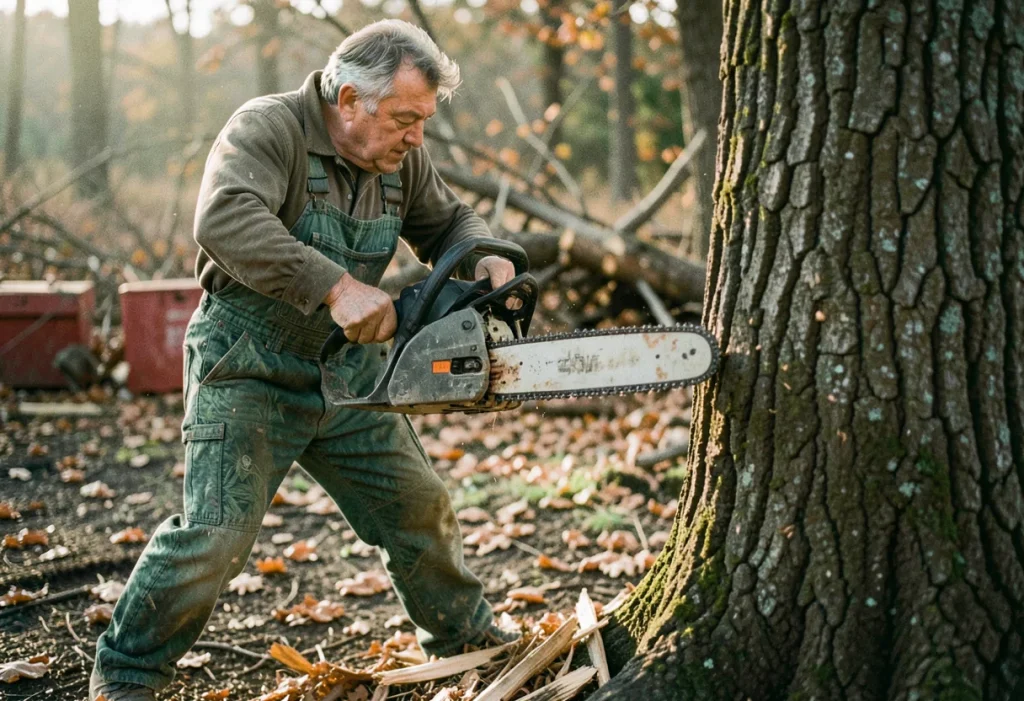
Battery-powered chainsaws offer portability and convenience. The DeWalt 20V Max XR is a top model, weighing 12.6 lbs with a 16-inch bar, ideal for light to medium cutting tasks. For heavy-duty use, consider the Makita XCU03PT, a 36V model with a 16-inch bar.
Battery-powered chainsaws are portable, electric-powered saws designed for cutting wood, ideal for homeowners and professionals needing lightweight, low-maintenance tools.
Think of a battery-powered chainsaw like a high-performance electric car for your toolbox: it’s quiet, lacks the fumes of gas models, and is ready to go as soon as you pop in a charged battery, but you’ll need to manage runtime against demanding tasks.
Key facts
- Runtime typically ranges from 30 to 90 minutes per charge, depending on battery voltage and task intensity.
- Voltage determines power: 40V is common for light trimming, while 80V+ tackles heavier work.
- Leading brands like and dominate the market with models balancing power and portability.
- Battery swaps allow extended use, but spare batteries add to the upfront cost.
01Best battery-powered chainsaws for runtime
Runtime is critical for battery-powered chainsaws, as it dictates how long you can work before recharging. The best models balance runtime with power, allowing you to tackle tasks efficiently. For example, the DCSA825 offers up to 60 minutes of runtime on a single charge, ideal for homeowners tackling moderate yard work. Professionals, however, might prefer the XCU04PT, which delivers up to 90 minutes of runtime with its dual-battery setup, making it perfect for longer jobs.
The downside? Higher runtime often means heavier batteries or bulkier designs, which can reduce maneuverability. For those prioritizing lightweight tools, the trade-off may not be worth it.
02Best battery-powered chainsaws for power
When power is the priority, look for models with high voltage and robust motors. The T400i tops the list with an 80V system, delivering performance close to gas chainsaws. It’s a favorite among professionals who need to cut thick branches or fell small trees. The MSA 200 C is another powerhouse, offering 36V but with a design optimized for heavy-duty tasks, including professional logging.
The trade-off here is usually runtime and cost. High-powered models drain batteries faster, and the initial investment in a top-tier battery system can be steep. However, for users who need raw cutting power, these chainsaws are worth the expense.
03Best battery-powered chainsaws for home use
Homeowners typically need a chainsaw that’s easy to use, lightweight, and capable of handling light to moderate tasks like pruning or cutting firewood. The LCS1240B fits this bill perfectly, with a 40V battery and a 12-inch bar, ideal for small trees and branches. Its compact size and low weight make it a breeze to maneuver, even for beginners.
The downside is that it lacks the power for heavy-duty work, so it’s not suitable for professionals or large-scale projects. However, for occasional use around the yard, it’s an excellent choice.
04Best place to buy chainsaws
Buying a chainsaw from a reputable retailer ensures you get a genuine product, warranty support, and access to customer service. and are top choices, offering a wide selection of brands, competitive pricing, and in-store pickup. Online platforms like provide convenience and user reviews, helping you make an informed decision. For specialized or professional-grade models, brand-specific websites or authorized dealers often carry the latest innovations and expert advice.
05Best chainsaw for the money
The WG304.1 boasts a 20V Power Share battery system, making it affordable and versatile for homeowners. It’s lightweight, easy to handle, and perfect for light pruning or small cutting tasks. The 40V Cordless Chainsaw is another budget-friendly option, offering a balance of power and runtime for the price.
These models won’t replace a gas chainsaw for heavy work, but they’re ideal for those who need a reliable tool without a high upfront cost.
06How to choose
- Runtime needs: Estimate how long you’ll use the chainsaw per charge and choose a model with sufficient battery life.
- Power requirements: Match the voltage to your tasks, higher voltage for thick branches or trees.
- Brand reputation: Stick to trusted brands like , , or for reliability.
- Budget: Consider both the initial cost and long-term expenses, like spare batteries.
For the best balance of power and runtime, the XCU04PT is a standout choice, offering extended use without sacrificing cutting performance. If you’re working on a budget, the WG304.1 provides excellent value for light-duty tasks.
Choose a chainsaw that aligns with your specific needs, whether it’s runtime, power, or budget, and you’ll find a tool that makes your work easier and more efficient.
07Frequently asked questions
How does the runtime of battery-powered chainsaws compare to gas models?
Runtime varies by model and battery capacity. For example, a 56V Makita chainsaw with an 18V x2 LXT battery pack might offer about 40 minutes of continuous use, while a comparable gas model can run for over an hour on a full tank. However, battery technology is improving rapidly, with some brands now offering swappable batteries that extend runtime.
Do battery-powered chainsaws have enough power for heavy-duty tasks?
Yes, modern battery-powered chainsaws can handle heavy-duty tasks. The DeWalt Flexvolt 60V Max chainsaw, for instance, delivers up to 120 cutting capacity and 16.0 m/s chain speed, comparable to many gas models. However, for professional logging, a gas chainsaw might still be preferred for sustained high-power use.
Which brands are considered the best for battery-powered chainsaws?
Top brands include DeWalt, known for its Flexvolt series; Makita, with its LXT platform; and Milwaukee, offering high-performance M18 Fuel chainsaws. These brands are recognized for their durable build, reliable performance, and innovative battery technology, making them popular among both professionals and DIYers.
How long does it take to charge a battery-powered chainsaw?
Charging times vary by brand and battery type. For instance, a standard 18V Makita battery might take around 30 minutes to reach 80% charge using a fast charger, while a full charge can take up to an hour. Some brands offer rapid charging options, reducing downtime significantly.